
Turning Wood Waste into Briquettes – Is It Worth It?
- David Condon

- Aug 8, 2023
- 8 min read
Updated: Mar 25
As a woodturner, I produce a huge amount of waste, shavings, offcuts, and sawdust from bowls, ornaments, and general workshop work.
In the early years, the only real option was to spread it around the garden to suppress weeds. That worked for a while, but it quickly became unmanageable as production increased.
Hiring skips to remove waste is expensive and not practical for a small workshop.
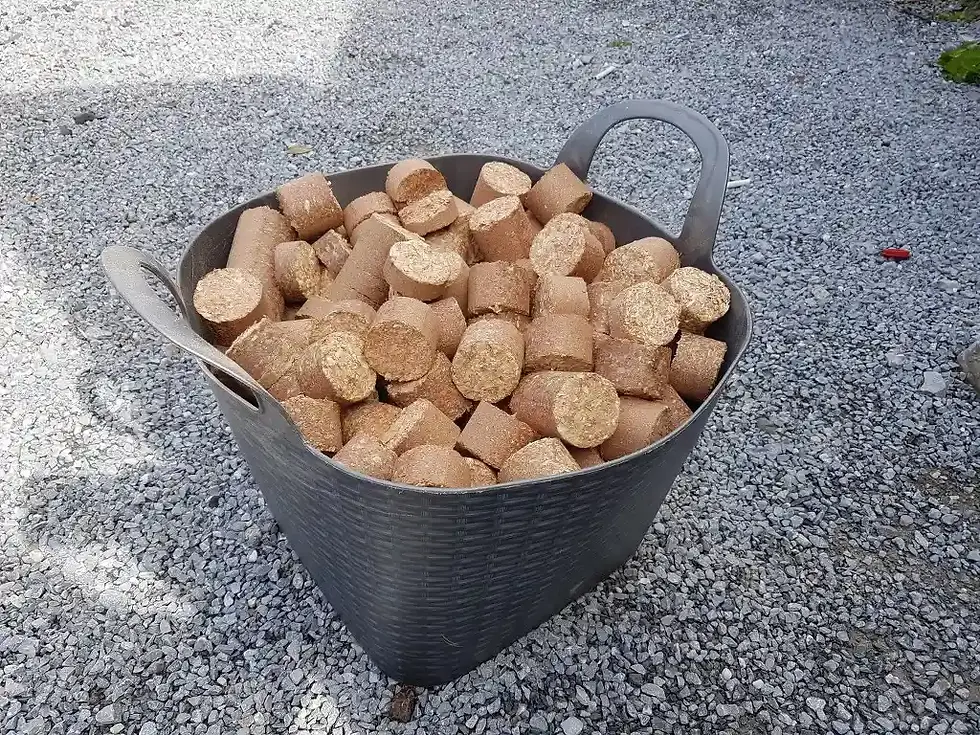
After a lot of trial and error, I eventually invested in a proper briquette machine. Instead of dumping waste, I now turn it into a usable product, some of which I sell, and the rest I use myself, especially around Christmas.
If you’re dealing with a lot of green wood, I’ve covered a simple controlled approach in my guide to building a DIY wood drying kiln.
If you’re looking for a more low-cost, practical setup, my post on drying spindle blanks on a budget (shed setup and airflow tips) walks through how I manage it in my own workshop.
Quick Answer: Is It Worth Making Briquettes?
Yes, if you produce a large volume of waste
No, if you only turn occasionally
It requires space, time, and investment
Why Everyone Is Interested in Making Briquettes
Every time I share photos or videos of briquette production, I get a flood of questions.
I’ve put a few videos up on my YouTube channel, some of which are included below, but they only scratch the surface. There are quite a few details that are easy to miss unless you’ve gone through the process yourself.
There’s a common belief that briquette making is an easy way to turn waste into profit.
You can make some money from it, but it’s not as simple as people expect. There are costs, limitations, and practical challenges that most people don’t see at the start.
A lot of those misconceptions come from a misunderstanding of the material itself, especially moisture content and how long wood actually takes to dry properly.
If you want a clearer picture of that side of things, my post Can You Really Dry Hardwood Fast? Here’s the Truth breaks down what’s realistic and what isn’t, and why moisture content plays a big role in everything from drying to briquette production.
The “Quick Money” Myth
There is no quick, cheap way to turn waste into profitable briquettes.
Most people are hoping for a simple setup where they can process shavings and start making money straight away. Unfortunately, it doesn’t work like that.
Turning waste into briquettes takes:
space
time
consistent material
and the right equipment
Space is the one most people underestimate. You need room not only to process the waste, but also to store both raw material and finished briquettes in a dry environment.
If you’re still setting up your wood cutting areas, you might also find my guide on setting up a simple cutting bench for woodturning blanks.
The Wet Paper Briquette Press
Like many people starting out, I had high hopes for the cheap hand press I bought from the hardware store.
I put together a simple system using paper mixed with dry shavings and managed to produce soft, spongy briquettes. It worked, to a point.
The real problem came with drying them.
I quickly realised I didn’t have anywhere near the space needed to make this approach practical. The process was messy, slow, and required far more storage than I had available.
Even once dried, the briquettes had to be brought into the house for storage, which wasn’t ideal given the mess involved.
That was the end of that experiment. I gave up on the hand press and started looking for a proper solution instead.
Hammermill for Pre-Processing
When I decided to go ahead with a briquette machine, I quickly realised that my waste material would need to be processed first.
Woodturning waste is very different to joinery waste. It contains larger, heavier shavings that won’t feed properly into a briquette machine without being broken down.
That meant I needed a hammermill.
I spent quite a bit of time searching for something suitable and eventually found a small single-phase hammermill from an Italian manufacturer for around €600. It’s not the fastest machine, but it’s more than capable of reducing the waste to a consistent size for briquette production.

Before running any material through the mill, I built a simple sorting table. This allowed me to manually remove anything that could damage the machine, nails, screws, and stray metal pieces.
Later, I added a long tool magnet along the edge of the table. That small change made a big difference, catching hidden metal and speeding up the whole process.
Hammermill in Action Video
Here is a quick video of the hammermill with some more explanations. I have a video of it in action somewhere, if I find it I will add it to this Blog. The sorting table magnet was not added at this point.
The PH Briquette Maker Machine
The briquette maker is not a simple “switch it on and walk away” setup, especially with woodturning waste.
When starting the machine, it takes around 10 minutes of adjusting the pressure handle to clear the previous material from the system.
The briquettes coming out at this stage are cold and inconsistent.
Once that clears, you then have to fine-tune the pressure again to suit the current material. This can take another 5 to 10 minutes of small adjustments before you get a consistent, usable output.

Material Matters More Than You Think
Because my waste is coarser than standard joinery waste, the machine needs to be fed carefully.
If the hopper is overfilled, the agitator can stop turning altogether. As new batches of material go in, the consistency changes, so you need to keep checking and adjusting as you go.
The PH machine is designed primarily for joinery waste, so using woodturning waste slows production down noticeably.
How I Run It in Practice
In reality, the machine needs to be monitored while running.
I usually carry out other tasks in the workshop alongside it, but I’m always checking in, feeding the hopper, and making small adjustments as needed.
A typical run starts early in the morning. I’ll keep feeding material until late morning, then let the hopper empty out so I can stop without needing to go back and check it again later.
PH Sawdust Briquette Maker Video 2
This is my second attempt at making a video showing the process, it won't win any awards.
Lots and lots of 30 Litre Buckets
One thing I completely underestimated at the start was just how much material I would need to store.
A few plastic bins weren’t anywhere near enough. You need space not only for raw waste, but also for finished briquettes, which come out hot and need time to cool before being bagged.

I ended up buying 30-litre plastic containers from Lidl, and they worked very well for both storage and handling.
Over time, I built up a collection of around 30 of them to keep on top of the ever-growing volume of material.
It might sound like a small detail, but storage quickly becomes one of the biggest challenges in the whole process.
Briquette Maker Video
This was an early video showing the machine in operation without any commentary.
It’s basic, but it gives a clear view of how the briquette maker runs in practice.
Improving the Process – Auto Feeder Concept
A few months after setting up the system, I revisited the process to see where improvements could be made.
One of the main issues was inconsistent feeding of material into the hopper, especially with coarser woodturning waste. To address this, I built a simple auto-feeder using chipboard and plywood as a proof of concept.
The idea is that vibration from the machine helps move the material forward at a steady rate. While wood dampens vibration more than steel, the setup still worked well enough to prove the concept.
Material now feeds more consistently, reducing the risk of the agitator stopping when too much waste is added at once.
I still need to top up the hopper from time to time, but overall the process is much smoother. The next step is to have a version made in stainless steel, which should improve performance further.
The only concern now is cost, as materials like stainless steel have increased significantly in recent years.

In Conclusion
Turning wood waste into briquettes is not a quick or easy solution.
It takes space, time, and a significant upfront investment. For a small workshop, it’s something that only really makes sense if you are producing waste consistently.
That said, it does solve a real problem.
Instead of paying for waste removal, I’m now turning that material into something useful. Some of it brings in a bit of money, and the rest I use myself, especially during the winter months.
For me, this has been a long-term investment rather than a short-term gain. It may pay for itself fully over time, but even now it has already made waste management far more manageable.
If you’re considering it, go in with your eyes open.
It works, but it’s not effortless.
You’ll find more practical workshop guides in my Woodturning Guides & Articles section.
Thanks for reading,
David
About the Author
I’m David Condon, a woodturner and small business owner based in Tralee, Co. Kerry. I’ve been working with wood for most of my life at this stage — 11 years as a carpenter and over a decade running my own woodturning business.
During that time, I’ve worked with Irish hardwoods, taught woodturning, and run my workshop full-time. On this site, I share the same knowledge I pass on to my students — from choosing the right wood and tools to finishing techniques that make every project shine.
I also stock a carefully chosen range of turning blanks, tools, and craft supplies that I use every day in my own work. You can explore more of my handcrafted pieces and classes at DavidCondonWoodcraft.ie.
© David Condon Woodcraft – All Rights Reserved.
☕ Buy Me a Coffee?
I used to run ads on my website to generate a small income, but they slowed things down and didn’t fit the feel of what I’m building here. So, I’ve removed them in favor of something simpler and more personal—a “Buy Me a Coffee” button.
If you found this post interesting, helpful, or simply enjoyable, feel free to use the link below to show your support. No pressure at all—but every little bit helps, and it’s always genuinely appreciated. As a small independent maker, I rely on a mix of teaching, crafting, and sharing to keep things going. This is just one way to help keep the shavings flying. Thanks so much!
More Woodturning Pages to Explore
Hampshire Sheen - Fine Finishing products that will highlight your project pieces
Hamlet Tools - Fantastic Woodturning Tools from a well trusted brand
Sanding Essentials - Essential sanding products for Woodturners & Woodworkers.
Woodturning Blanks - A fine range of Hardwood Spindle Blanks & a few Bowl Blanks too!
Woodturning Pen Blanks - A huge assortment of Acrylic & Irish Hardwood Pen Blanks.
Crafter's Haven – A vast range of craft supplies for crafters and gift givers!


Comments