
Spindle Roughing Gouge Sizes Explained – Which One Should You Use First?

I’ve had students turn up with completely different sizes of roughing gouge, and most of the time they don’t really know why they chose it.
Quite often, they’ve bought or received the gift of a woodturning chisel set, usually one of the cheaper ones, and just gone with whatever was in the box. I’ve written about those sets before, and they’re not something I recommend. Many come with a coated finish that doesn’t behave well on the tool rest, and they often need a bit of work just to get them usable. If you’ve read that post, you’ll already know my feelings on that subject.

In reality, you don’t need a full range of spindle roughing gouges to get started. Most woodturners will naturally settle on one or two sizes that suit their style and the type of work they do. Others prefer to have the full set, and to be fair, I fall into that category myself. A tool for every occasion and spares too. We’ve all convinced ourselves we needed “just one more”.
Once you understand what each size is actually good at, the decision becomes much easier.
Quick Answer: Roughing Gouge Sizes at a Glance
Here’s a quick guide to the most common sizes, in order:
● ½" gouge – better suited to lighter work and smaller cutting areas
● ¾" gouge – the best all-round size and the one I recommend to most beginners and above
● 1 1/4" gouge – for an extra bit of heft, long handle for more grip and torque
● 1 3/4" gouge – when you need big, go bigger. Ultimate control with a long handle, you barely feel the wood
If you’re only buying one to start with, the ¾" below is usually the safest and most versatile choice.
What a Spindle Roughing Gouge Is Actually For
Before getting into sizes, it’s worth clearing up a very common mistake.
A spindle roughing gouge is designed for:
Removing bulk material quickly
Rounding square stock into cylinders
Working between centres, side grain only
It is not designed for bowl turning or platter work. That’s one of the most important safety points in woodturning, and something I regularly correct when people come in with their own tools.
What Actually Does the Cutting? (Flute & Edge Explained)
When people look at a spindle roughing gouge for the first time, they tend to focus on the size of the tool. ¾", 1", 1¼"… it all sounds important.
But the part that actually does the work is much smaller.
It’s the cutting edge and the flute.
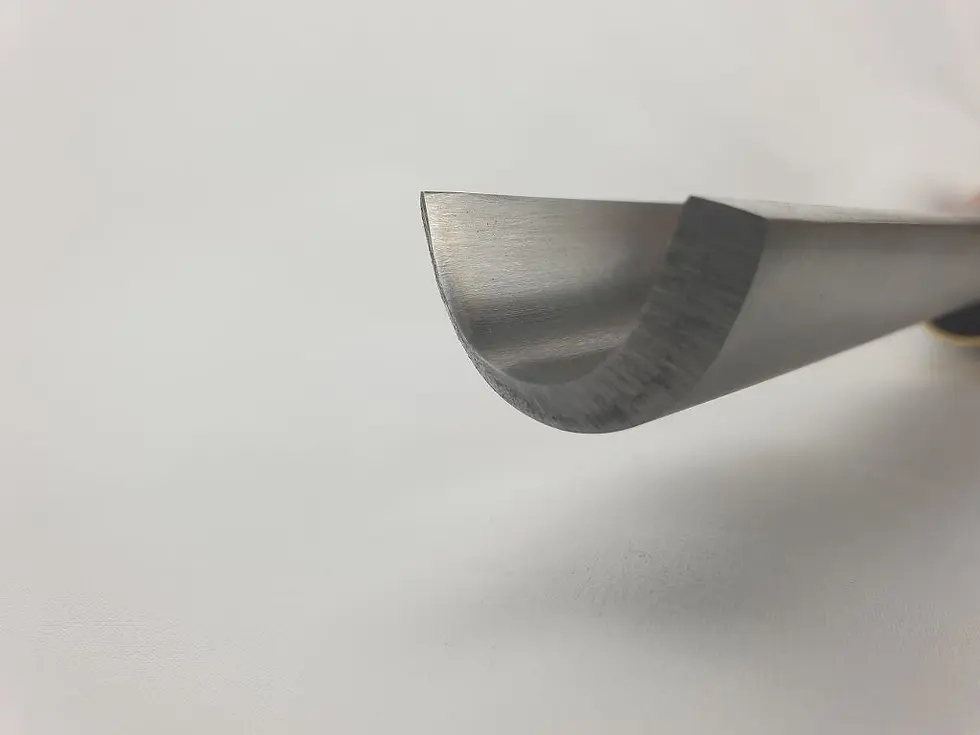
The flute is the curved channel running along the top of the gouge. That shape controls how the tool behaves, how much wood it can remove, and how easy it is to keep under control.
On a larger roughing gouge, the flute is wider and deeper. That means it can move a lot of material quickly, which is great once you know what you’re doing, but it can feel quite aggressive at the start. The larger roughing gouges have more cutting edge to work with and have more flexibility if you want to change your presentation angle at any stage during turning.
On a smaller gouge, the flute is shallower and narrower. It removes less wood with each pass, but it’s far easier to control, especially when you’re still getting used to how the tool rides on the rest.
Understanding the Cutting Edge & Bevel
The cutting edge is the sharpened tip at the end of the flute, where the bevel and flute meet. It’s the only part that should be doing the work. If too much of the edge engages at once without bevel support, the tool can grab, which is where beginners often get caught out.
The bevel rests on the wood and helps guide the cut, giving you control and stability as you work.
This is why bigger isn’t always better. At least in the beginning.
A large gouge might seem like the “proper” tool, but in reality, it’s often harder to handle until your technique improves. A slightly smaller gouge gives you more control, and control is what matters most in the early stages.
For many new woodturners, the price of the tool will ultimately decide what they go for. Most won’t stretch to the larger HCT065 or HCT066 versions in the beginning, and to be honest, they don’t need to. A mid-range ¾" HCT064 is a far more practical starting point.
Spindle Roughing Gouge Sizes Explained
½" Roughing Gouge HCT063
This is a lighter, more controlled tool.
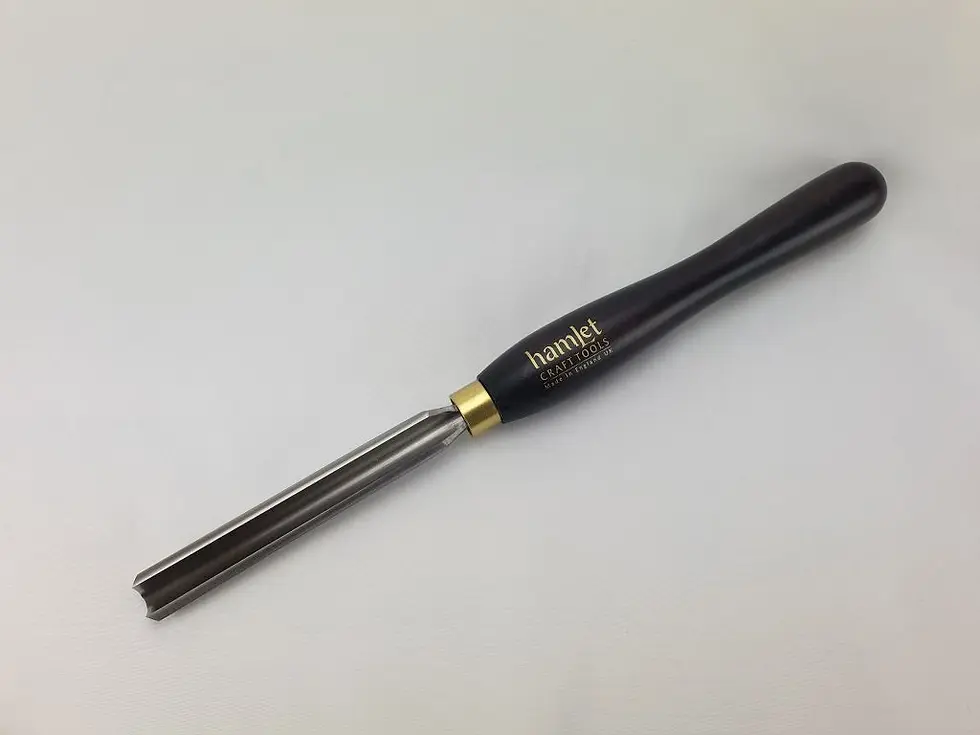
It’s useful when:
You’re working on smaller spindle projects
You want a bit more finesse
You don’t need to remove large amounts of material quickly
It won’t hog off material like the bigger sizes, but that’s not always a bad thing, especially for beginners who are still building confidence. View this tool on my Hamlet Tools page.
¾" Roughing Gouge (Best All-Rounder) HCT064
If I had to recommend one size to most people, this would be it.

It gives you:
A good balance between control and material removal
Enough width to work efficiently
Enough control to stay safe and accurate
Most of my students are comfortable on this size very quickly, and many never feel the need to go bigger. View this tool on my Hamlet Tools page.
1 1/4" Roughing Gouge HCT065
This is where things start to feel different.
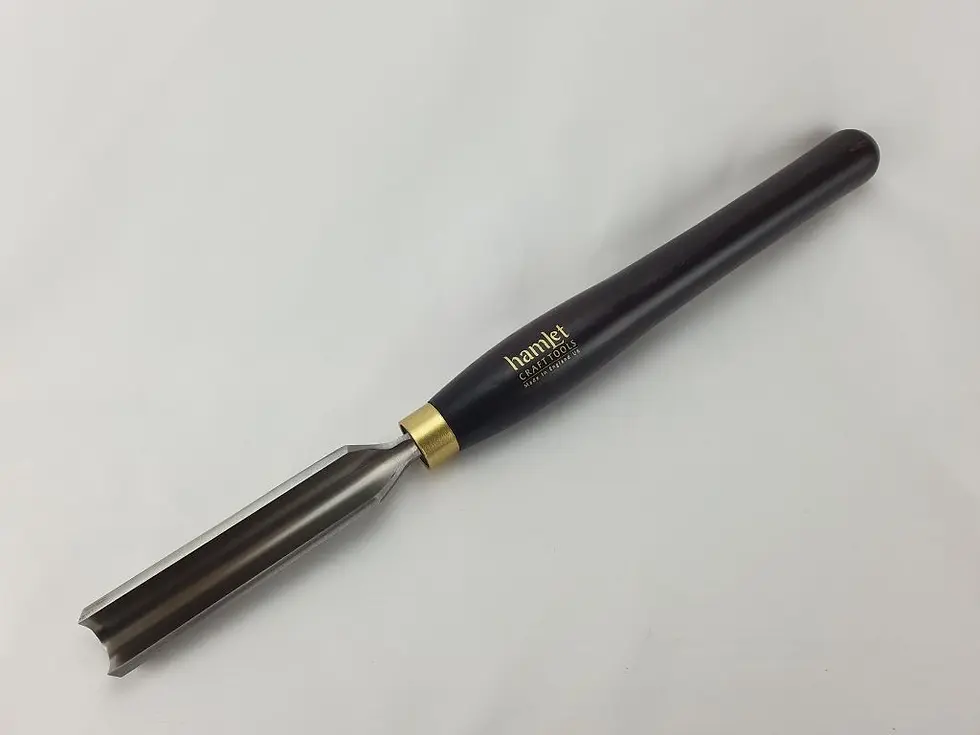
You get:
More weight in the tool
A longer handle
Greater leverage and torque
It’s ideal when:
You’re working with larger spindle blanks
You want to remove material faster
You’re confident in your tool control
There’s a noticeable jump in presence compared to the smaller gouges. View this tool on my Hamlet Tools page.
1 3/4" Roughing Gouge HCT066
This is the big one.

When you use it properly:
The tool does most of the work
The cut feels very stable
You almost “float” through the timber
The long handle gives excellent control, and once you’re used to it, you barely feel the wood resisting the cut.
That said, it’s not something most beginners need straight away. View this tool on my Hamlet Tools page.
What I See in the Workshop
This is where things get interesting.
A few patterns I see regularly:
People buying the biggest gouge they can find, thinking bigger = better
Struggling with control because the tool feels too aggressive
Using a small gouge but expecting it to remove material quickly
Not understanding that technique matters more than size
In most cases, the issue isn’t the tool, it’s how it’s being used.
That’s why I usually steer beginners toward the ¾" to start with. It gives you a bit of everything without overwhelming you and it's a tool you will continue to use daily, just like I do.
The Spindle Roughing Gouges I Use
These are the sizes I keep in the workshop and recommend depending on the job:
½" for lighter work and smaller pieces
¾" as the main go-to tool
1 1/4" for heavier stock removal
1 3/4" when working on larger spindle blanks
You can view the full range roughing gouges on my Hamlet Tools page, where I’ve listed the options I use and recommend. For guidance on other tools, check out the next section.
Buying Woodturning Tools Is Hard
If you’re new to woodturning, it’s very easy to get overwhelmed by the number of tools available and the different opinions on what you actually need.
A spindle roughing gouge is one of the tools beginners often meet early, but it is only one part of the wider tool picture. I cover the broader buying decisions in Beginner Woodturning Tools: What to Buy First and What to Avoid.
These guides build directly on what you’re doing here. The roughing gouge gets your spindle blank round, but your spindle gouge, bowl gouge, and parting tool each have their own role once you move beyond that first stage.
Final Thoughts
You don’t need every size to get started.
In fact, most people are better off mastering one good tool before adding more to the rack.
If you’re unsure, start with the ¾" roughing gouge. It’s the most forgiving, the most versatile, and the one I see working best for the majority of people coming through my workshop.
From there, you’ll naturally figure out if you need something smaller, or something with a bit more weight behind it.
The good or bad news, depending on your perspective, is that you’ll probably end up adding a few more tools over time. That’s just part of progressing in woodturning as your confidence grows and you start taking on different types of work.
If you’d like to explore more like this, I’ve grouped all of my posts into a single page here: Woodturning Guides & Articles, where everything is organised by category.
Thanks for Reading,
David
──────────── ✿ ────────────
If you’d like to support what I do here, there’s a small “buy me a coffee” option below.
──────────── ✿ ────────────
☕ Buy Me a Coffee?
I used to run ads on my website to generate a small income, but they slowed things down and didn’t fit the feel of what I’m building here. So, I’ve removed them in favor of something simpler and more personal—a “Buy Me a Coffee” button.
If you found this post interesting, helpful, or simply enjoyable, feel free to use the link below to show your support. No pressure at all—but every little bit helps, and it’s always genuinely appreciated. As a small independent maker, I rely on a mix of teaching, crafting, and sharing to keep things going. This is just one way to help keep the shavings flying. Thanks so much!
About the Author
I’m David Condon, a woodturner and small business owner based in Tralee, Co. Kerry. I’ve been working with wood for most of my life at this stage — 11 years as a carpenter and over a decade running my own woodturning business.
Over the years, I’ve learned that woodturning is as much about patience and problem-solving as it is about tools and technique. I work mainly with Irish hardwoods, teach woodturning full-time, and spend most days learning something new in the workshop myself. On this site, I share the same practical knowledge I pass on to my students, shaped by experience, mistakes, and time spent at the lathe. If you’re interested in learning in person, I offer woodturning lessons in Tralee, with details available on my Woodturning Tuition page.
© David Condon Woodcraft – All Rights Reserved.
More Woodturning Pages to Explore
● Hampshire Sheen - Fine Finishing products that will highlight your project pieces
● Hamlet Tools - Fantastic Woodturning Tools from a well trusted brand
● Woodcraft Hub - View my woodcraft creations for inspiration of gift buying.
● Sanding Essentials - Essential sanding products for Woodturners & Woodworkers.
● Woodturning Blanks - A fine range of Hardwood Spindle Blanks & a few Bowl Blanks too!
● Woodturning Pen Blanks - A huge assortment of Acrylic & Irish Hardwood Pen Blanks.
● Crafter's Haven – A vast range of craft supplies for crafters and gift givers!
Original content © David Condon Woodcraft — Written by David Condon. Please credit and link if shared.


Comments