
The Most Dangerous Moment in Woodturning Is When You Get Too Comfortable

There is a dangerous stage in woodturning that does not get talked about enough.
It is not usually the first day, when you are nervous and standing six feet back from the lathe.
It is not always the first catch, or the first time you try a new tool.
Very often, the dangerous moment comes later, when you have been turning for years, you know the process, you know the tools, you know what should happen, and you start allowing small shortcuts to creep in.
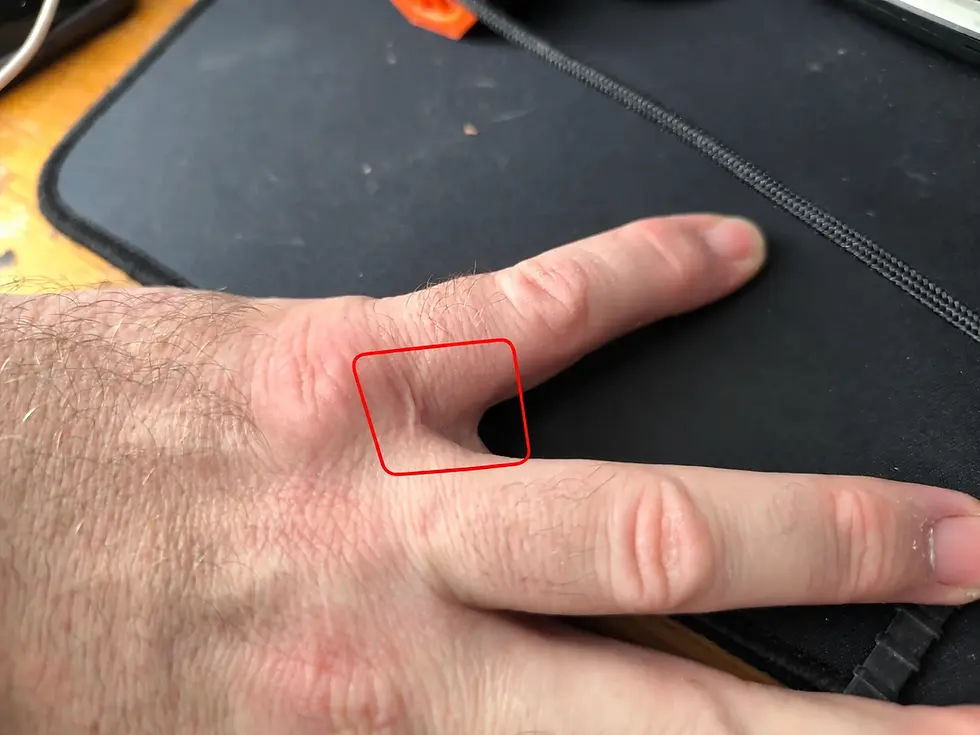
That was exactly what happened to me during the Covid restrictions.
I had been turning every day. I was experienced, comfortable, and probably a bit too casual with something I should have treated with more respect, cutting a tenon into a bowl foot.
That moment left me with a painful hand injury, a visible scar, and a much stronger respect for toolrest position, sharpening, and supported cuts.
The image above was taken a few years later, and the scar doesn’t look significant at all. At the time, though, the injury was painful for weeks and made me reevaluate almost everything I was doing at the lathe.
I have much bigger scars than this, so the size of the cut wasn’t the issue. It was a relatively small accident in a very sensitive part of the hand, and the damage underneath affected my work for several weeks.
More importantly, it shook my confidence at the lathe for a while. I had become too comfortable, started taking chances, and when something finally went wrong, I wasn’t prepared for it.
The Bowl I Was Turning
I was working on a 12-inch Ash salad bowl.
At that stage, the bowl had already been turned and I was working on the foot. I was using my Hamlet HCT44GL scraping tool to form the dovetail at the base of the bowl.
This is a tool I still use for this job because I use Vicmarc jaws, and the shape of the tool suits the dovetail I need to create. Used properly, it does the job well. This tool cuts using a raised burr and must be sharpened a little and often to maintain the burr.
But on this day, two things were wrong.
The toolrest was a fraction too far away from the foot of the bowl.
And I had not resharpened the tool when I should have and it was the bar and not the burr that I was scraping with.
Neither mistake felt dramatic at the time. That is the problem.
They were small shortcuts. The sort of thing you tell yourself is “fine” because you have done the job hundreds of times before.
But in woodturning, small shortcuts can combine very quickly.
What Went Wrong
When using this scraping tool to form the dovetail, I normally cut with the left-hand face of the tool.
As I reach the corner of the foot, I pull the tool back outwards towards my body.
That slight withdrawal matters. It stops the tool from engaging where it should not. It keeps the cut controlled and prevents the tool from being caught between two surfaces.
On this occasion, I did not pull back quickly enough.
The tool was not as sharp as it should have been after the first couple of passes, and when I met the corner of the foot, the blunt tool connected on two faces.
That was the moment everything changed.
The tool was pulled down violently.
Because the toolrest was too far away for a scraping action, there was too much unsupported tool overhang. The downward force had room to act like a lever.
That sudden leverage pulled the bowl away from the remounting plate, and the rim of the bowl struck my hand exactly where it was resting on the toolrest, between my small finger and the finger beside it.
The distance from toolrest to the foot was just shy of an inch but there was enough of a fulcrum.
The lathe was running at about 900 rpm.
It happened instantly.
There was no time to react, no time to pull away, no time to think.
One second I was making a routine cut, the next second the bowl had hit my hand with serious force.
The Injury
You can still see a small scar where the skin broke. I don't mind scars, I have plenty.
But the real damage was underneath.
I am fairly sure I either fractured the bone or badly bruised it. I did not go to hospital at the time because this happened during Covid restrictions, and like many people, I did not want to risk going in unless I absolutely had to.
That may or may not have been the right decision, but it is what I did at the time.
What I do know is that it hurt for weeks afterwards why is why is suspected a break, fracture or bone bruise.
It was not just a small knock. It was deep pain in the hand, exactly where the force had gone through. Even simple movements reminded me of it.
For a woodturner, that sort of injury is frightening because your hands are everything. They are your contact with the tool, your feel, your control, your confidence.
And that brings me to the second part of the accident.
The Accident Did Not Just Hurt My Hand
The physical injury was bad enough.
But the next time I went to turn the foot of a bowl, my hands were literally shaking.
That surprised me.
I had been turning for years. I had dealt with catches. I had turned hundreds of pieces. I knew what I was doing.
But this was different.
The accident had exposed a weak point in my setup and in my habits. I knew exactly how it had happened, and I knew it could happen again if I did not change something.
That is the part beginners may not expect.
A woodturning accident does not always end when the cut stops. It can sit in your head afterwards. It can make you second-guess a tool, a cut, or a setup that you had previously used without thinking.
In my case, the answer was not to give up using the tool. The answer was to change the setup so the same mistake could not happen so easily again or better yet, never happen again.
The Real Cause Was Not Just the Catch
It would be easy to say, “The tool caught.”
But that is too simple.
The accident happened because several things lined up at the same time.
● The tool was not sharpened when it should have been
● The toolrest was further away than it should have been
● The tool had too much unsupported overhang
● I allowed the tool to connect where it should not have
● I had become too comfortable with a familiar job
That last one matters.
I knew better.
I knew the tool should have been sharpened.
I knew the rest should have been closer.
I knew the corner of the dovetail needed care.
But because I was experienced, I let myself get casual.
That is one of the most dangerous habits in woodturning.
Not ignorance.
Not fear.
Comfort.
Sharpening Laziness Was Part of the Problem
One of the biggest lessons from this accident was that sharpening has to be easy enough that you actually do it when you should.
At the time, I had not resharpened the HCT44GL to raise the burr again after the first couple of passes.
That mattered.
A sharp burr tool cuts more cleanly and with less force. A dull or tired edge needs more pressure, gives less feedback, and is more likely to skate, grab, or catch in a way you do not expect.
After this accident, I bought a second slow-speed grinder with CBN wheels and extra Wolverine platforms.
That might sound excessive, but for me it removed friction from the sharpening process.
I did not want sharpening to be something I delayed because the grinder was set up for something else, or because I could “probably get one more pass” before sharpening.
That “one more pass” mentality is exactly how mistakes happen.
I have a separate post on sharpening a spindle roughing gouge where I show more of my sharpening setup and approach. The same principle applies here: sharp tools are not just about getting a cleaner finish, they are part of working safely and consistently.
If you want to see more of my sharpening setup, have a look at my post on Sharpening a Spindle Roughing Gouge, where I also include a video.
The Toolrest Change That Made the Biggest Difference
The other big change I made was how I support the tool when cutting the foot of a bowl.
I stopped using a standard straight toolrest for this particular job.
Instead, I started using a goblet toolrest positioned extremely close to the bowl, only millimetres away from the work.
That changed everything.
With the toolrest so close to the cutting area, the tool has far less unsupported overhang. If downward force happens, the tool is supported immediately.
That does not mean a catch can never happen.
It does mean the tool is not given the same room to act like a long lever.
And in this particular operation, that matters.
When scraping the dovetail on the foot of a bowl, I want the tool supported as close to the cut as possible. I do not want a long section of tool hanging out over space, especially when I am working near a shoulder or corner.
The goblet rest gives me much better support and makes the whole process feel more controlled.
Why Toolrest Distance Matters So Much
Toolrest distance is one of those things beginners hear about all the time, but it can sound like a small detail.
It is not a small detail.
The further the tool projects beyond the toolrest, the more leverage the wood has over the tool.
If the tool catches close to the rest, there is very little unsupported length for the wood to pull down.
If the tool catches with a lot of overhang, the tool can be dragged down violently.
That is what happened to me.
The lathe did not care that I had years of experience. The spinning bowl did not care that I had made the same cut before.
The physics were simple.
Too much unsupported tool, a blunt edge, a bad moment at the corner, and the bowl won.
Why I Still Use the Tool
I should make this clear: I do not blame the HCT44GL tool.
The tool did not cause the accident on its own.
My setup and my habits caused the accident.
I still use the tool because it suits the dovetail shape I need for my Vicmarc jaws. I could probably redesign or make another tool for this job, and I may do that at some stage, but the main issue was not the tool itself.
The main issue was support.
Once I changed the toolrest setup and made sharpening easier, the process became much safer and more controlled.
That is an important distinction.
Sometimes when a catch happens, woodturners blame the tool straight away. But before blaming the tool, it is worth asking:
Was it sharp?
Was the rest close enough?
Was the tool properly supported?
Was I cutting or scraping in the right place?
Was I rushing because I had done it before?
Those questions are often more useful than simply saying, “That tool is dangerous.”
The Lesson for Beginners
If you are new to woodturning, there is a simple lesson here.
Do not copy someone’s confidence without also copying their setup.
When you see an experienced turner make something look easy, it is very easy to miss the small details that make it safe.
The toolrest position.
The height of the rest.
The sharpness of the tool.
The speed of the lathe.
The direction of the cut.
The amount of tool overhang.
The way the tool is withdrawn before it gets trapped in a corner.
Those things are not minor details. They are the difference between a controlled cut and a bad catch.
And sometimes they are the difference between a harmless surprise and an injury.
The Lesson for Experienced Turners
For experienced turners, the lesson is probably even more uncomfortable.
You can know all of this and still get caught out.
That is what happened to me.
I was not a beginner. I was not guessing. I was not using a tool I did not understand.
I simply got too comfortable.
That is why I think this is one of the most dangerous stages in woodturning. When you are new, fear keeps you alert. When you are experienced, routine can make you lazy.
You stop checking.
You stop sharpening as often as you should.
You leave the toolrest a little further away because it saves a few seconds.
You tell yourself the cut will be fine.
Most of the time, it is fine.
Until it is not.
What I Changed After the Accident
This accident changed my working habits in a few specific ways.
● I sharpen sooner instead of trying to stretch one more pass from a tired edge
● I use a second grinder setup so sharpening is quicker and easier
● I use CBN wheels for consistent sharpening
● I keep extra Wolverine platforms set up to reduce excuses
● I use a goblet toolrest when cutting the foot of bowls
● I position the rest millimetres from the bowl where possible
● I take tool support more seriously than ever
● I no longer treat familiar cuts as harmless cuts
None of those changes are dramatic on their own.
But together, they make the job safer.
That is often how safety improves in a workshop. Not through one grand decision, but through small practical changes that remove bad habits and make good habits easier.
A Safer Setup Is Not a Sign of Fear
There is a strange thing in woodturning, and probably in many crafts, where people sometimes treat caution as weakness.
I do not see it that way.
A safer setup is not a sign that you are afraid of the lathe.
It is a sign that you respect it.
A lathe is not dangerous because it is evil or unpredictable. It is dangerous because it spins wood at speed, and if something goes wrong, it happens faster than your hands can react.
You cannot out-reflex a catch.
You have to prevent it before it happens.
That means sharp tools, close toolrests, controlled cuts, good body position, and not allowing routine jobs to become careless jobs.
FAQ Section
What is one of the most dangerous habits in woodturning?
One of the most dangerous habits in woodturning is becoming too comfortable with routine cuts. Familiar jobs can lead to small shortcuts, such as leaving the toolrest too far away, delaying sharpening, or rushing a cut near a shoulder or corner.
Why is toolrest distance important in woodturning?
Toolrest distance matters because the further the tool extends beyond the rest, the more leverage the spinning wood has over the tool. If a catch happens with too much unsupported tool overhang, the tool can be pulled down violently.
Can a blunt woodturning tool be dangerous?
Yes. A blunt or tired edge usually needs more pressure to cut and gives less clean feedback. This can increase the chance of the tool skating, grabbing, or catching, especially near corners, shoulders or dovetails.
Why should woodturning tools be sharpened often?
Woodturning tools should be sharpened often because sharp tools cut more cleanly, require less force, and are easier to control. Frequent sharpening is not just about finish quality, it is also part of safe tool control.
Is scraping dangerous in woodturning?
Scraping is not automatically dangerous, but it still needs proper support, a sharp edge and good toolrest position. Problems can happen when a scraper is used with too much overhang, too much pressure, or near a corner where it can catch on more than one surface.
Final Thoughts
This was not my worst injury in life, but it was one of the most sobering moments I have had in woodturning.
The scar is small.
The lesson was not.
I was lucky. The bowl hit my hand and hurt me badly, but it could have been worse. It could have hit my face. It could have broken fingers properly. It could have caused damage that affected my turning for much longer.
Since then, I have treated that cut differently.
I still turn bowls. I still form dovetails. I still use the tool. But I do not use the same casual setup that led to the accident.
The most dangerous moment in woodturning is not always when you are afraid.
Sometimes it is when you are completely comfortable.
If you take anything from this post, be more diligent about sharpening your tools and pay closer attention to your toolrest position. Sharpen sooner rather than pushing a tired edge, and keep moving the rest closer as the shape of the work changes.
They are small habits, but they can make an enormous difference.
Experience should make you safer — not make you stop paying attention.
You can find more practical advice on tools, sharpening, technique and workshop safety in my Woodturning Guides & Articles section.
Thanks for Reading,
David
P.S. If you found this article useful and you're a member of a woodturning forum, club or discussion group, you're very welcome to share it there if it's relevant to a conversation. It may help another turner too. You can share this post using the three dots at the top of the page, or directly from the Blog list page.
──────────── ✿ ────────────
If you’d like to support what I do here, there’s a small “buy me a coffee” option below.
──────────── ✿ ────────────
☕ Buy Me a Coffee?
I used to run ads on my website to generate a small income, but they slowed things down and didn’t fit the feel of what I’m building here. So, I’ve removed them in favour of something simpler and more personal—a “Buy Me a Coffee” button.
If you found this post interesting, helpful, or simply enjoyable, feel free to use the link below to show your support. No pressure at all—but every little bit helps, and it’s always genuinely appreciated. As a small independent maker, I rely on a mix of teaching, crafting, and sharing to keep things going. This is just one way to help keep the shavings flying. Thanks so much!
About the Author
I’m David Condon, a woodturner and small business owner based in Tralee, Co. Kerry. I’ve been working with wood for most of my life at this stage — 11 years as a carpenter and over a decade running my own woodturning business.
Over the years, I’ve learned that woodturning is as much about patience and problem-solving as it is about tools and technique. I work mainly with Irish hardwoods, teach woodturning full-time, and spend most days learning something new in the workshop myself. On this site, I share the same practical knowledge I pass on to my students, shaped by experience, mistakes, and time spent at the lathe. If you’re interested in learning in person, I offer woodturning lessons in Tralee, with details available on my Woodturning Tuition page.
© David Condon Woodcraft – All Rights Reserved.
More Woodturning Pages to Explore
● Hampshire Sheen - Fine Finishing products that will highlight your project pieces
● Hamlet Tools - Fantastic Woodturning Tools from a well trusted brand
● Woodcraft Hub - View my woodcraft creations for inspiration of gift buying.
● Sanding Essentials - Essential sanding products for Woodturners & Woodworkers.
● Woodturning Blanks - A fine range of Hardwood Spindle Blanks & a few Bowl Blanks too!
● Woodturning Pen Blanks - A huge assortment of Acrylic & Irish Hardwood Pen Blanks.
● Crafter's Haven – A vast range of craft supplies for crafters and gift givers!
Original content © David Condon Woodcraft — Written by David Condon. Please credit and link if shared.


Comments